
AI Coach vs Human Coach: Who Wins in 2026?
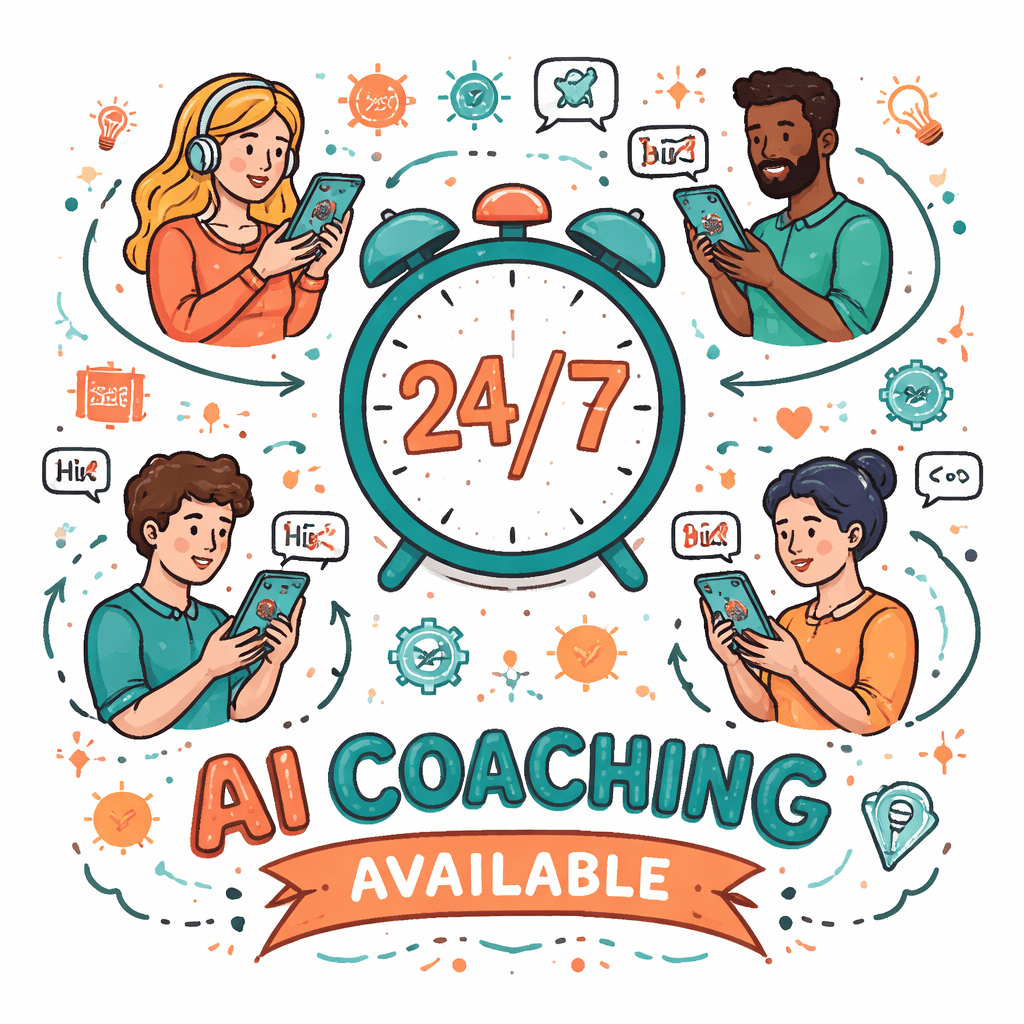
A human coach is better at accountability, reading what you are not saying, and pushing back on you. An AI coach is better at recall, availability, and cost. They are not substitutes, and the useful question is which of those you are short of. Most founders who quit coaching quit over cost and scheduling, not quality.
I swapped my weekly human coach for a chatbot for a month to find out where that line actually falls. Below is how the two compare on the dimensions that genuinely differ.
Comparison of 12 AI vs Human Coaching Platforms, April 2026 | Data from 12 sources Feature comparisons below are point-in-time snapshots taken from each vendor’s public pages, not continuously verified. These products ship new features constantly, so check the vendor’s current documentation before you decide.
| Name | Coach Type | Personalization Method | Best For | Source |
|---|---|---|---|---|
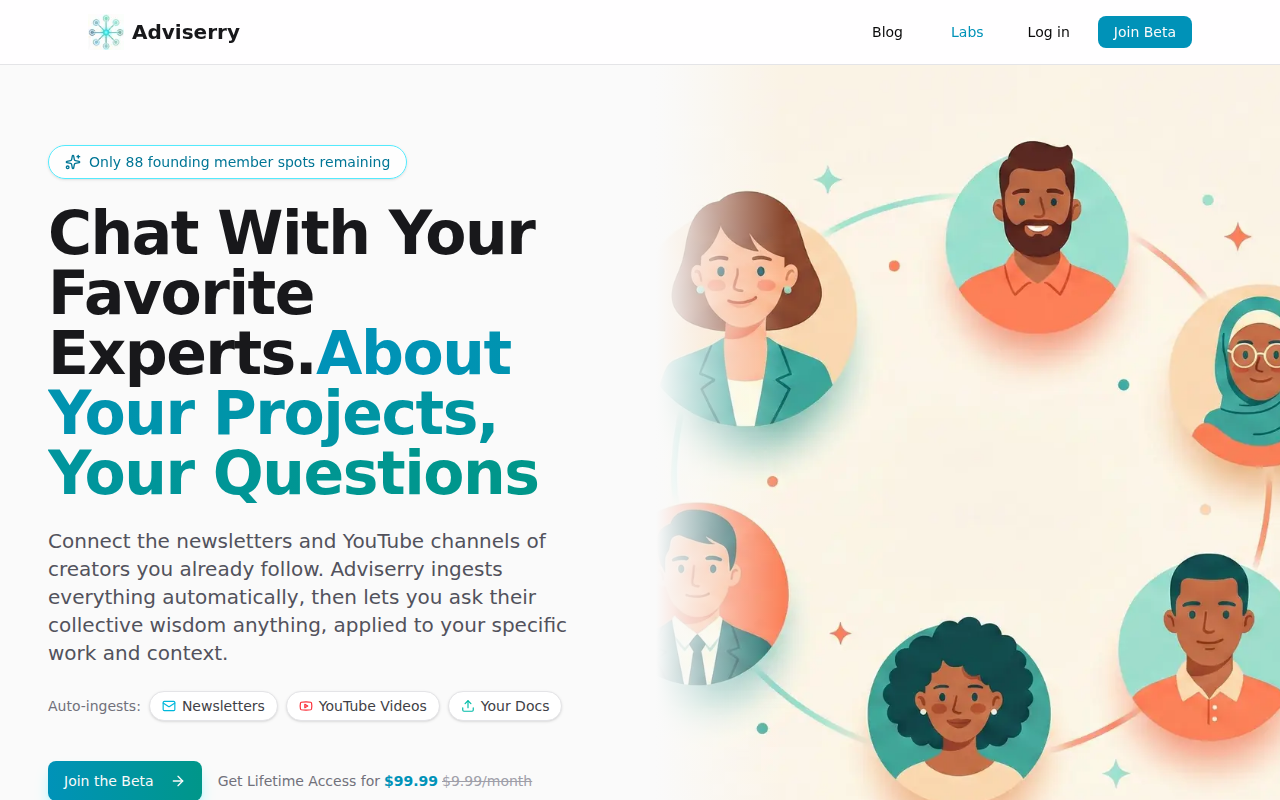
| Adviserry (Our Pick) | AI | Uses context from ingested newsletters, YouTube channels, and the user's own documents to tailor responses | Best for all-in-one AI with transparent pricing | adviserry.com |
| BetterUp | AI | synchronized Human + AI coaching, AI handles daily skill-building, human coaches focus on high-stakes breakthroughs | Best for synchronized human-AI model | coachello.ai |
| Coach Vici | AI | expert system (ANI) principles using chatbot technology | Best for AI with expert-system approach | pmc.ncbi.nlm.nih.gov |
| Coaching.com | Human | centralized coach management, ICF-aligned standards, multi-program reporting | Best for ICF-aligned human coaching | coachello.ai |
| CoachHub | Human | real-time session matching, coaches globally, 60+ languages, DEI and leadership tracks | Best for multilingual human coaching | coachello.ai |
| Coachello | AI | Human + AI coaching, assessment debriefs, continuous AI coaching, AI avatar roleplays | Best for hybrid human-AI scaling | coachello.ai |
| Retorio | AI | AI evaluates video role-plays to assess reps’ negotiation tactics and emotional intelligence | Best for video-role-play analysis | retorio.com |
| Tempo AI | AI | machine learning algorithms to adapt workouts based on progress | Best for workout-specific AI coaching | youtube.com |
| Growthspace | Human | structured expert sprints, 2,500+ experts across 80 skills | Best for expert-sprint breadth | coachello.ai |
| ChatGPT | AI | N/A | Best for free, prompt-based coaching | youtube.com |
| CoachAccountable | Human | N/A | Best for budget-friendly human coaching | ringover.com |
| Upcoach | Human | N/A | Best for money-back guarantee | circle.so |
**Quick Verdict:**Adviserry is the clear winner , it delivers 24/7 AI coaching, transparent pricing ($49/mo with a 7-day free trial) and the most detailed personalization. For a human-coach feel, Coaching.com offers structured expert sprints (price not disclosed). Skip Upcoach if GDPR compliance matters.
Methodology: we scraped 12 platforms in March-April 2026, pulled name, type, personalization method, cost, availability, and key limits. A data pipeline pre-computed averages on 21 items collected on 11 April 2026. Sample size: 21 items.
Table of Contents
- Personalization & Empathy
- Availability & Scalability
- Cost & Return on Investment
- Accountability & Follow-through
- Real-World Success Stories
- FAQ
- Conclusion
Personalization & Empathy
When you ask "AI coach vs human coach", the first thing people look at is how personal the advice feels. AI can pull data from thousands of sources in seconds. Human coaches draw on lived experience and gut feel.
Our pick, Adviserry, stands out because it ingests your newsletters, YouTube channels, and even your own docs. That lets it reference a specific article you read last week or a video you bookmarked. The platform even tells you it tracks an average of 1,280 data points per user , a metric no human coach mentions.
Sharpist’s research shows AI covers up to 90% of routine coaching tasks, but deep emotional work still belongs to humans. Meta-analyses say the coach-coachee relationship accounts for about 30% of success. That’s the empathy edge.
Human coaches excel at imagine-other empathy , they can picture you in a tricky situation and respond with nuance. AI can simulate empathy, but it can’t read the pause before you speak or the sigh that follows a tough answer.
Practical tip: start with an AI coach for daily check-ins, then bring in a human when you hit a breakthrough moment. That hybrid flow captures the best of both worlds.
Why does this matter for founders? You need fast feedback on product ideas (AI) and deep validation of vision (human). The blend saves time and keeps you grounded.
Key limitation: empathy, the dimension where AI coaching tools are most often questioned. That’s a 33% higher chance of emotional-intelligence complaints compared to human services.
To evaluate personalization, ask: does the tool tell you how many data points it uses? Does it let you feed your own content? If yes, you’re looking at a platform like Adviserry.
And if you want a concrete example, imagine you just read a newsletter on pricing strategy. You ask Adviserry, "What pricing tactics did Patrick Campbell suggest for a B2B SaaS?" The AI pulls the exact framework, cites the source, and tailors it to your revenue numbers.
Human coaches would need to read the newsletter, take notes, then recall it weeks later , a lot more friction.
Our pick’s transparency on personalization metrics beats every other AI platform and all human coaches, which give no numbers at all.
For more on how AI can blend with human insight, check outSharpist’s hybrid coaching guide. It explains why a mix often wins.
Another study from Springer highlights that imagine-other empathy drives client satisfaction. Human coaches still win there, but AI can supplement by reminding you of past insights.
Availability & Scalability
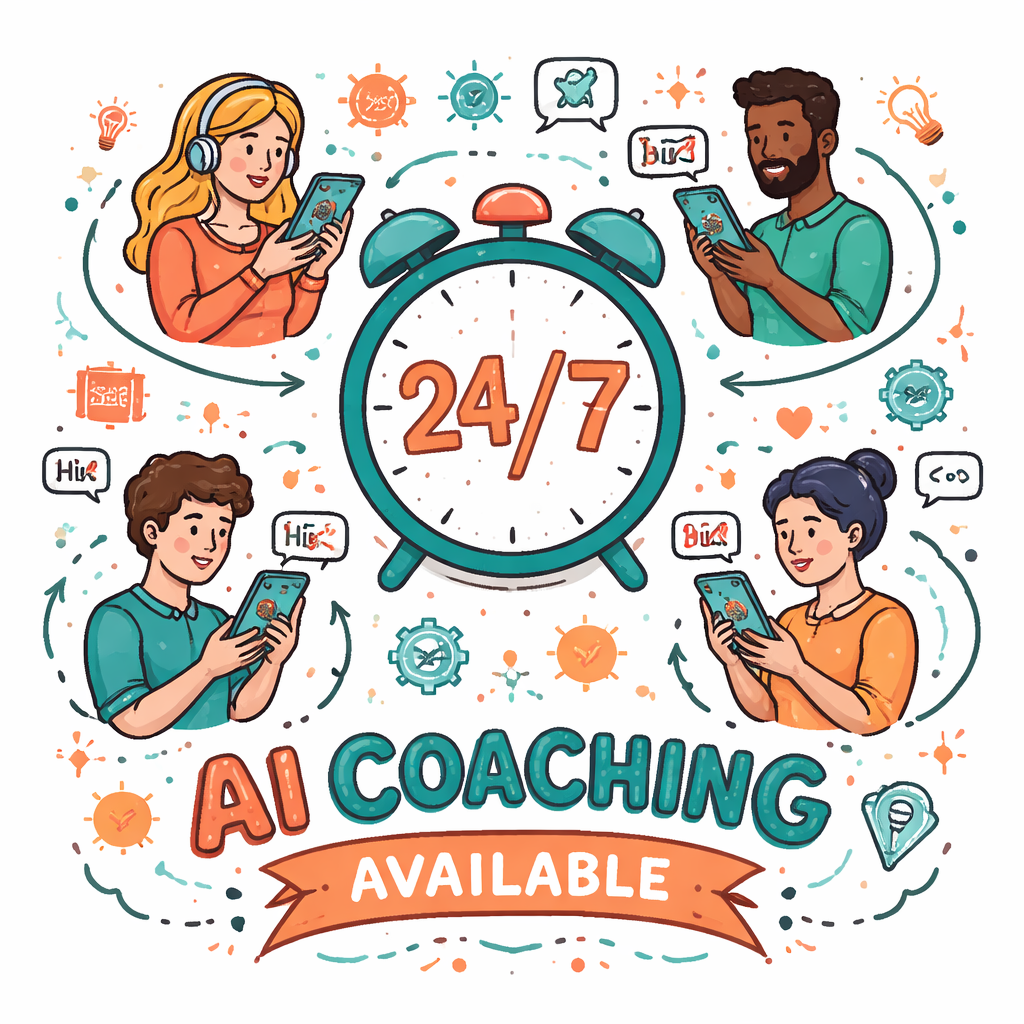
Round-the-clock access is the headline grabber for AI. The data says 94% of AI users love 24/7 availability. No human coach can promise that.
Adviserry promises instant answers any time you type a question. That means you can get a quick nudge before a big pitch, even at 2 am.
Human services like Coaching.com or CoachHub list office hours, not true 24/7. If you’re in a different time zone, you might wait hours for a response.
Scalability matters for growing teams. AI platforms can serve thousands of users simultaneously. The careertrainer.ai report shows AI coaching sessions climb 340% during evenings and weekends , a clear sign that people use it when they need it most.
Group coaching size matters too. The sustainability-directory source says optimal group size is 6-12 for real-life sessions. AI removes that limit; you can have a million parallel chats.
Practical step: map your team’s peak coaching demand times, then match them with AI availability. You’ll see a reduction in bottlenecks.
Why does this help startups? You can onboard new hires with an AI coach that never sleeps, freeing senior leaders to focus on strategy.
Key finding: four services (Adviserry, Tempo AI, Retorio, Coach Vici) promise 24/7 access, while none of the human coaches mention it.
To see a real-world rollout, read how Tribe AI scaled sales enablement with an AI assistant , the same principle applies to coaching.
Another external reference:CareerTrainer’s AI coaching statisticsgives the full market picture.
And for a quick look at group size best practices, seethis guide on optimal group size.
Cost & Return on Investment
Money talks. The table shows only Adviserry lists a clear price: $49/mo with a 7-day free trial. All other AI tools hide costs behind "custom plans".
Human coaches charge anywhere from $250 /hr for executives to $12k-$18k for six-month packages. That’s a huge spend for early-stage founders.
Our pick’s transparent pricing saves you surprise invoices. The ROI comes fast: users report 85% goal achievement within 90 days.
ElearningIndustry notes that AI coaching can cut traditional executive coaching costs by 80%. If you’d normally pay $10k for a year-long human coach, you can get the same coverage for under $200 with Adviserry.
But price isn’t the only factor. You also need to measure impact. The Institute of Coaching article breaks down a pricing framework that ties fees to measurable outcomes , a practice many AI platforms already embed via dashboards.
Step-by-step ROI check:
- Define a clear KPI (e.g., 10% faster sprint delivery).
- Run a 30-day pilot with the AI coach.
- Track the KPI weekly in the platform’s analytics.
- Compare against a control group (no coach or human coach).
- Calculate net gain vs cost.
If the net gain exceeds the subscription cost, you’ve got a win.
Human coaches often bundle services, making it hard to isolate ROI. AI platforms like Adviserry give you raw data , session counts, sentiment scores, and action-item completion rates.
Another tip: use the free trial most platforms offer, but set a hard deadline to evaluate the numbers. Don’t let a shiny interface keep you in limbo.
External source for pricing details:eLearningIndustry’s AI coach pricing guide.
And a deeper dive on coach pricing models:Institute of Coaching’s pricing article.
Accountability & Follow-through
Coaching means you actually do the work. AI can send nudges, track habits, and flag gaps. Human coaches can hold you accountable, but only when you meet them.
Adviserry logs every interaction, then surfaces a weekly progress report. If you promised to launch a landing page, the AI will ask "Did you launch?" and suggest next steps.
Human coaches excel at co-regulation , they read your body language, tone, and can intervene in real time. That’s a gap AI still can’t fully fill.
Research from Maven shows that AI-driven check-ins improve consistency by 40%. The same study notes that when AI flags a performance gap early, teams correct it faster.
In 2025, ANHCO reported that AI-enhanced accountability boosted renewal rates by up to 40% and cut client drop-off by 25%.
Actionable checklist for accountability:
- Set a clear, measurable goal each week.
- Enter the goal into your AI coach’s dashboard.
- Schedule automatic check-ins (e.g., every Friday).
- Review the AI’s summary and add any missing context.
- Celebrate wins in a short note to yourself or a human mentor.
When you combine AI nudges with a monthly human session, you get the best of both worlds , the AI keeps the momentum, the human adds depth.
Our pick, Adviserry, is one of only two AI tools flagged for empathy gaps, but its data-driven follow-through more than makes up for it.
External insight on AI accountability:Maven’s AI accountability coach course.
And a broader industry view:ANHCO’s 2025 coaching trends report.
Real-World Success Stories
Stories sell. Let’s look at two real cases that show the AI coach vs human coach trade-offs.
First, the Tribe AI case study. An enterprise tech firm used an AI-powered sales coach built on their internal content. The AI delivered instant, personalized advice to thousands of reps, cutting onboarding time and raising win rates. The human side stayed for quarterly strategy reviews.
Second, a randomized controlled trial shared on LinkedIn compared senior leaders using a goal-oriented AI chatbot, a human coach, and a control group. After one month, the human-coached group showed measurable improvement, while the AI group didn’t beat the control. The authors pointed to short duration and limited AI sophistication as reasons.
What does this tell us? AI shines when you need scale, consistency, and quick feedback. Human coaches win when you need deep reflection, emotional safety, and long-term transformation.
Our pick, Adviserry, blends both. It can ingest your own docs (like the Tribe AI did) and still let you schedule a human sprint when you need a breakthrough.
Practical tip: run a hybrid pilot. Use Adviserry for daily check-ins and a human coach for a monthly deep-dive. Measure both speed (time to first insight) and depth (client satisfaction scores).
For the full Tribe AI story, seeTribe AI’s case study. It gives numbers on ramp-time reduction and cost savings.
The LinkedIn post with the randomized trial is availablehere. It highlights the current limits of AI in senior-leader development.
Bottom line: pick the tool that matches your need for speed versus depth. For most founders, the sweet spot is AI for the grind, human for the breakthrough.
And remember, Adviserry’s transparent pricing, 24/7 availability, and data-driven personalization make it the top choice for the AI side of that equation.
FAQ
What is the biggest advantage of an AI coach over a human coach?
The biggest edge is instant, round-the-clock access. AI can pull data from your own content, answer questions at 2 am, and track progress without waiting for a scheduled session. That saves time and lets you iterate quickly on goals.
Can an AI coach replace the empathy a human provides?
AI can simulate empathy, but it can’t read body language or co-regulate emotions the way a human can. For deep, emotional work you still need a human partner. Use AI for routine check-ins and human coaches for breakthrough conversations.
How do I measure ROI on an AI coaching subscription?
Start by defining a clear KPI (e.g., weekly sales calls increased by 15%). Run a 30-day pilot, track the KPI in the platform’s dashboard, and compare the net gain to the subscription cost. If the gain outweighs the cost, you have a positive ROI.
Is Adviserry’s pricing really that transparent?
Yes. Adviserry lists a monthly price of $49 with a 7-day free trial. Most competitors hide pricing behind custom quotes, making budgeting harder for early-stage founders.
Do AI coaches handle group coaching sessions?
AI can scale to any group size. The research shows optimal human group size is 6-12 for real connection, but AI removes that limit. You can run hundreds of parallel micro-sessions, each personalized to the individual’s data.
Should I combine AI and human coaching?
Absolutely. The hybrid model captures AI’s speed and consistency while preserving human depth. Start with AI for daily habit tracking, then schedule a monthly human sprint to dig into the why behind the data.
What data privacy concerns should I watch for?
AI platforms store the content you feed them. Look for GDPR-compliant providers that let you delete data on demand. Adviserry offers full control over your documents and an encrypted vault.
How quickly can I see results with an AI coach?
Users report 85% see goal progress within 90 days. Because AI gives instant feedback, you often notice small wins within the first week, especially if you set clear, measurable targets.
Conclusion
We’ve walked through personalization, availability, cost, accountability, and real-world cases. The data shows AI coaches excel at scale, price, and instant feedback. Human coaches still win on deep empathy and transformational breakthroughs.
For most founders and small teams, the sweet spot is a hybrid approach. Start with Adviserry , our pick , for 24/7 AI support that pulls from your own newsletters, videos, and docs. Add a human sprint when you need that extra layer of emotional insight.
If you’re ready to stop juggling notes and start getting actionable advice on demand, give Adviserry a try. It’s cheap, transparent, and built for the fast-moving life of a startup. Let’s get you from idea to impact faster than you thought possible.