The Founder Who Made a $40K Pricing Decision in 10 Minutes

The Founder Who Made a $40K Pricing Decision in 10 Minutes
Let me tell you about a conversation I've heard a version of at least a dozen times now.
A SaaS founder — let's call him Marco — has been sitting on a pricing decision for six weeks. His software is priced at $79/month. He suspects he's undercharging. His accountant says raise prices. His co-founder says don't rock the boat. He's read two blog posts about SaaS pricing that gave him opposite advice. He's been "thinking about it" since March.
Marco asks his AI advisory board: "Should I raise prices on my $79/month SaaS product? Current churn is 3.2% monthly. Most churned customers cite budget. What does my board recommend?"
Ten minutes later, he has a decision.
What the board actually returned.
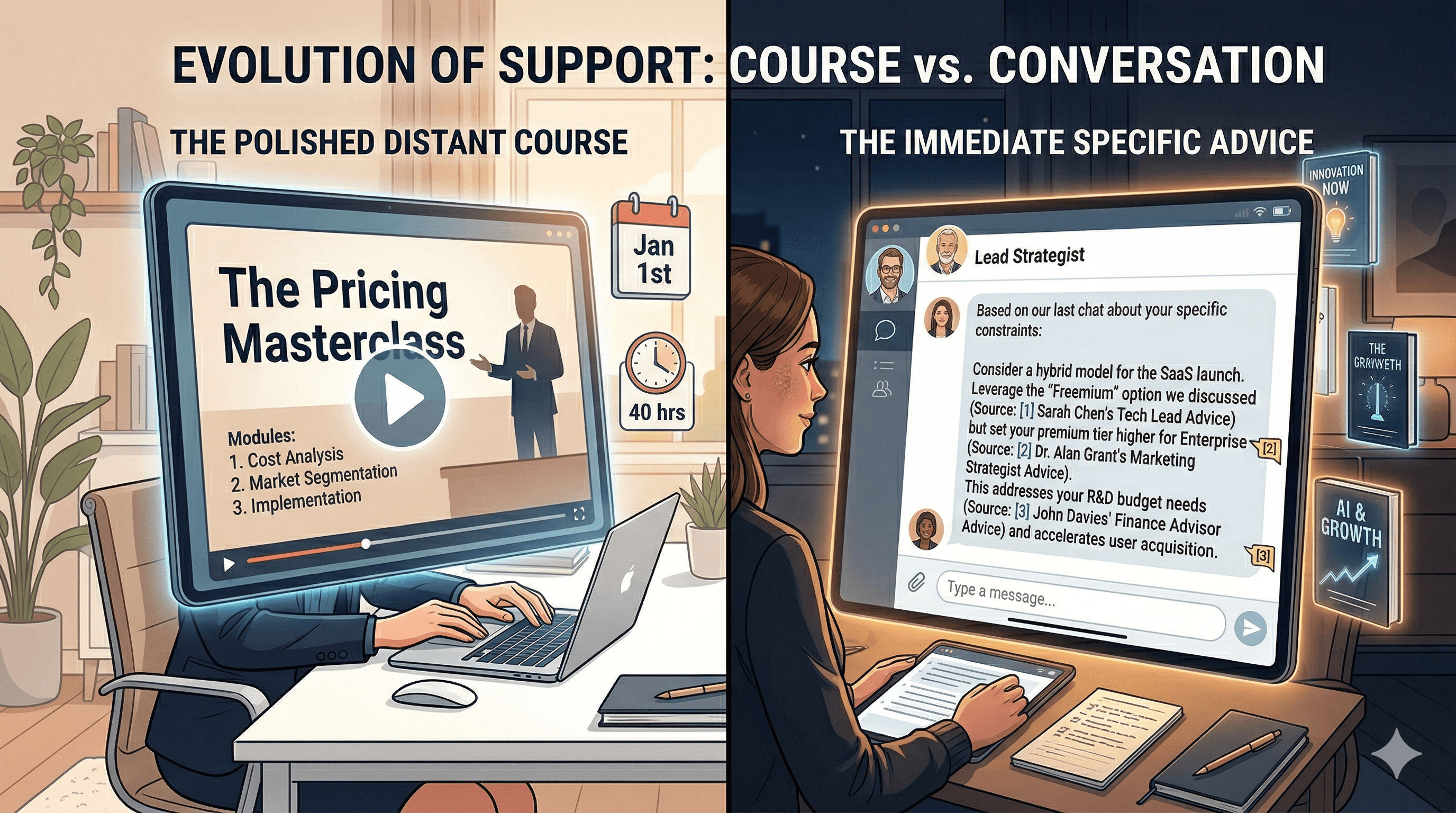
Three frameworks, synthesized. Hormozi's perspective on value-based pricing and why willingness-to-pay is almost always higher than founders think. Lenny's benchmark data on B2B SaaS churn rates and what 3.2% monthly implies about product-market fit (it's high — the board says fix the product before raising prices). A counterpoint from a pricing-focused post in his sources suggesting that the budget-churn framing is often a proxy for "not enough perceived value," which is a positioning problem, not a price problem.
The board's synthesis: don't raise prices yet. Fix the product or the positioning so that the value is more obvious, then raise prices from a position of strength. Here's what to test first.
[Image suggestion: A SaaS founder at their desk, reading an AI advisory board response — a clear three-part breakdown visible on screen with source names attached. The expression is relief and clarity, not more confusion. Warm, editorial product illustration.]
Six weeks to ten minutes.
Marco had been stuck for six weeks not because the decision was that hard, but because he didn't have the right input to move. He had opinions from people who weren't specialists. He had blog posts that contradicted each other. He had the feeling that he was missing something and didn't know what.
The board gave him the missing thing: a synthesis of what people who actually know pricing at depth have said about the specific situation he's in. With source attribution. In ten minutes.
He didn't raise prices. He fixed his onboarding instead. Three months later, churn dropped to 1.8% and he raised prices from a position of real product confidence.
The $40K math.
If he'd raised prices at 3.2% monthly churn, he'd have accelerated customer loss and damaged his growth rate. The cost of that mistake, modeled out over 12 months, would have been roughly $40K in net revenue — conservative estimate.
The ten-minute conversation cost him $15.
That's not a metaphor. That's just the math.
Keep Reading:
- How I Use Adviserry to Get Personalized Pricing Advice From Hormozi's Content — deep dive into Hormozi-based pricing decisions
- How to Cross-Reference Advice From Multiple Experts — synthesizing conflicting expert perspectives
- How to Build a "SaaS Founder" Advisory Board — build your own pricing advisory board
Image Prompts:
- A visual of a business question ("Should I raise prices?") being answered with a structured synthesis from three named expert sources — shown as a clean chat interface with source attribution visible. The confidence of the answer is the visual story. Editorial, product-realistic style.
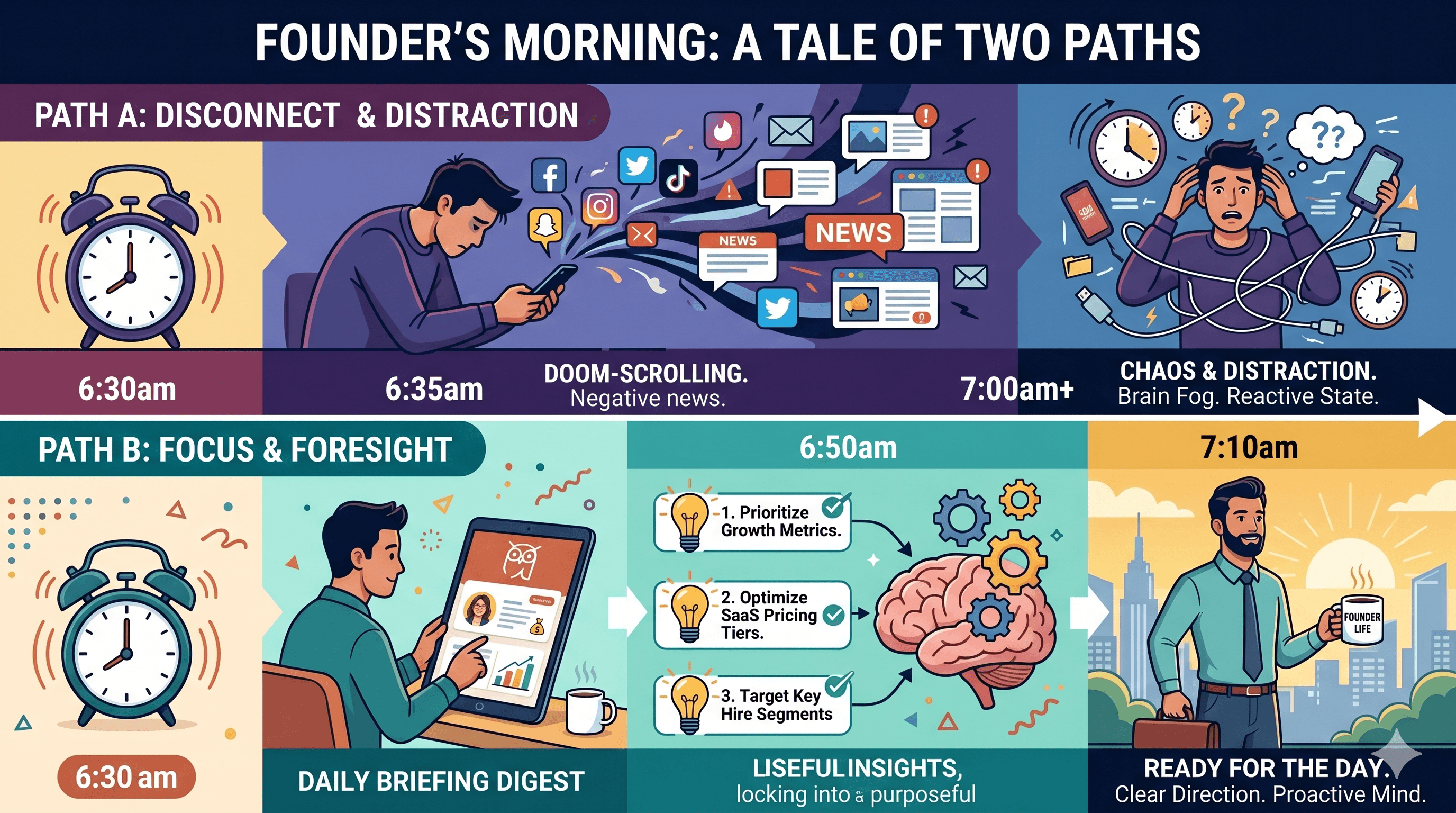
- A decision timeline: "Week 1-6: Stuck" (shown as a confused loop) vs. "Week 6, Day 1, 10 mins: Decided" (shown as a clean arrow forward). Simple, slightly wry infographic contrast.